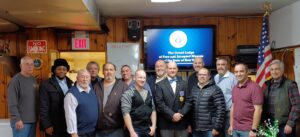
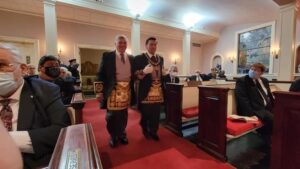
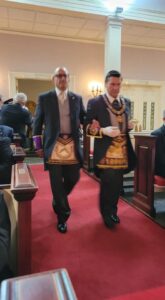
It seems that with the COVID situation some basic elements of “what do I need to do for….” scenarios has gotten lost in the shuffle. I have been asked by more then one WBro. what they need to do to request the Suffolk Post 23 to come to a ‘event’, like a DDGM visit and present he colors?
There is a very simple answer to this. ASK.
All a Lodge Secretary or Master need do is make a request. Typically the request should be sent to the Commander (=Master) or the Post Adjutant (=Secretary).
There are several ways to do this. You can go to the Post website -> Post 23 Website or send and email to the Commander or Adjutant. The name and email or phone can be located on the Post website above or look at the DDGM tresleboard with the name and contact info of a lot of Brothers in the Suffolk District, the Suffolk Post 23 Commander would be among these as well.
Finally a phone call or even a text would be acceptable. In years past, and I am traditionalist to some degree, it would only be acceptable to write a letter to the Post Commander. I personally, will accept a letter, and email, a phone call, smoke signals, etc. All I ask is that you request the Post.
In most instances like DDGM visits, the Post schedules to be at all DDGM visits as it’s a courtesy to the DDGM more then the Lodge and we know know how much a WM has to accomplish leading up to an event like this. So rather than add to the burden we will just assume you will make the request. But it is nice to be asked.
Should you need to make such a request, please see my profile in 10 different places, here on suffolkmasons.com, BAND, mwvp23.org just to name a few.
P.S. for all veterans who are Master Masons, please check out the website above and consider joining the Post here in Suffolk. Dues are very low and we are one of the most active Posts in the Jurisdiction.
As a plug to recruitment – fill out a petition here – > Join Suffolk Post 23 Click the “Join Now” button!
Fraternally,
V:.W:. Bill Arnold
Commander
Suffolk Post 23, MWV
https://connetquot838.org/wp-content/uploads/2021/03/Square-on-Flag-300x189.jpg00webmasterhttps://connetquot838.org/wp-content/uploads/2021/03/Square-on-Flag-300x189.jpgwebmaster2021-11-08 15:30:352021-11-08 15:30:35From the Commander of Suffolk Post 23, MWV
The Suffolk Grand Lodge Staff officer, R:.W;. Bob Licata, has set the dates for the RTE (Road to the East), the MCD (Masonic Development Course) and the Master’s Chair.
The RTE Course is required for Officers who are expected to be elected and Installed in the East in the coming year or two. However any Master Mason may sit for the course. The RTE is a course designed to educate upcoming officers on how a Lodge should operate, Masonic Law and several other topics.
The MDC (Masonic Development Course) is a class that any Master Mason may take. It is designed for newer Master Masson to learn more of the history and basics of our Craft.
The Master’s Chair of course is a required 1 day session for all newly elected and not yet invested or installed Worshipful Masters of individual Lodges. So all Brothers sitting as SW in a Lodge this year (2021-2022) if you are expected to be elected to preside in the East for 2022-2023 or beyond, you should lock this date into your calendar and make sure you are there. Those that may have taken this course in the past as you have already been in the East, you should take it again.
All dates are on the BAND Calendar as well as the website calendar. Set your reminders and RSVP to the GLSO, R:.W:. Robert Licata at glso@suffolkmasons.com for any of the courses listed.
https://connetquot838.org/wp-content/uploads/2021/03/Square-on-Flag-300x189.jpg00webmasterhttps://connetquot838.org/wp-content/uploads/2021/03/Square-on-Flag-300x189.jpgwebmaster2021-11-07 09:16:012021-11-07 09:16:01GLSO sets dates for RTE – MCD and Masters Chair
In the past 24 months or so we saw some interesting things like virtual Lodge meetings and alike. Times sure do change in the blink of an eye. I suppose this also could be a consequence of the storied “NY Minute”. Either way we have managed to stay together and come out, what looks like it may be the light at the end of the tunnel, stronger than when we went in.
Lodges and member of the District put on their thinking caps and came up with, what I might say are ingenuous and unique ways to communicate with members of their Lodges.
After speaking with members from different Lodges and getting more ideas it still seems to me that one that is chosen is still most promising. There are currently 150+ member of the Suffolk District on BAND. Don’t know what BAND is or never heard of it? Well you can go here to learn more -> BAND
This platform like any other is not perfect but it’s not rife with hundreds o thousands or millions of “other” users. It possesses most the features of a FB or other social media but definitely better customization and fewer ads and alike. But more on that later.
The key is that I can connect the District Website Calendar and the BAND events calendar to keep them in sync so any event put on the Suffolk District BAND Calendar will within 24 hours be on the District Website calendar. Good news for the staff that maintains them both….yours truly. Beyond the time savings it also allow for public and private chats, Posting items of interest, Looking up other members that you may need to get in touch with, Sending alerts to some or all members, Adding items like to-dos, events, signups, attendance, etc. to posts. Plus a myriad of other features we hardly use but could prove useful. Even live streaming and video conferencing are included.
Not to hype this too much but it would be fantastic if more Brothers from the District would sign themselves onto the BAND (link above). Lodges can even create BANDs for their Lodge and see them all in one place and post to multiple bands at once.
With the announcement of the “New” suffolkmasons.com website there have been a few Brothers that have registered there as well. If they poke around they will notice a few things like a file repository where common files for Masons can be found. Great if your in a pinch and need a document or application, etc. it’s at your fingertips on a PC, smartphone, etc.
Something new being bandied about is adding a feature set to the https://suffolkmasons.com/events page. We currently use the “Events Calendar” by Modern Tribe to handle the events around the district. There are more options available and it would be great to see if we can’t take advantage of these. Namely Community Events. What Community Events addition would give us is the ability to allow members of Lodges to add their own events and sell tickets online using options like PayPal or alike to collect funds. Since this is a additional cost and the LIPMA is discussing powering this system there would be a site fee to create and sell tickets on the suffolkmasons.com website, maybe $1.00/ticket for example. There is also a component that allows for fee splitting. This is the key feature. It will split the payment between the event host and site host. So as each online payment is made, the exampled $1.00 would go to LIPMA and the rest of the payment to the event host. This fee could be added at checkout and combined with Credit/Debit transaction fees or just taken from the total. Either way the system is self sustaining and available to all. If anyone has used a paid system called Eventbrite, you will already know how this works.
This could be a good thing for the Lodges of the District for fundraising and assuring you are getting paid for the tickets you sell instead of mailing tickets all over never knowing if and when they will come back.
If anyone would like to discuss the potential pros/cons of this it would be a pleasure to discuss. There will be a public chat opened of the Suffolk District Band for this topic and I hope to get feedback and input on this and bring it to fruition for the Lodges of the Suffolk Masonic District.
https://connetquot838.org/wp-content/uploads/2021/03/Square-on-Flag-300x189.jpg00webmasterhttps://connetquot838.org/wp-content/uploads/2021/03/Square-on-Flag-300x189.jpgwebmaster2021-11-04 14:35:172021-11-04 14:35:17Connecting the District together
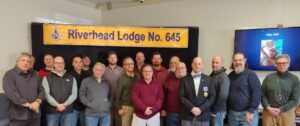
At last night’s stated Communication of Riverhead Lodge #645 , where Riverhead, Peconic and Potunk were busy passing 4 EAs to the Fellowcraft degree, brothers from as far as San Antonio, TX and some others more local were in attendance.
The Master of Riverhead Lodge, W:. Terry Maccarrone and all the brothers who participated in the degree did and awesome job.
A hearty congratulations to our newest Fellowcrafts in Riverhead, Peconic and Potunk.
Also in attendance was the freshly minted DDGM, R:.W:. Jeff Santorello and R:.W:. Charles Catapano, past DGM, recognized and given Grand Honors by the Lodge.
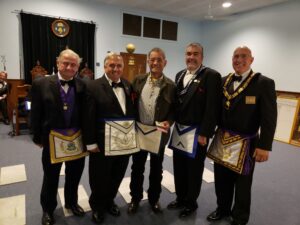
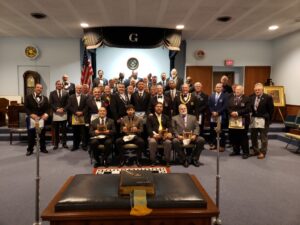
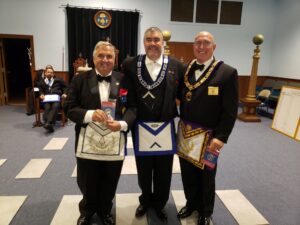
Of course most of the Brothers were not only were there to support Riverhead, Peconic and Potunk Lodges with their 2nd degree, but also to try and claim the Suffolk District Traveling Gavel.
As one of the last orders of business, W:. Maccarrone took a head count and although other Lodges came out and gave it a best shot, Potunk Lodge #1071 came out with 7 (8 but one had to leave early) Brothers to claim the #SuffolkDistrictTravelingGavel once again.
For other Lodges the next time the gavel will be up for grabs is Thursday, Nov. 4th 2021 at Potunk Lodge.
Again you can see the stats and location of the Suffolk District Traveling Gavel on the Suffolk District Website – https://suffolkmasons.com/traveling-gavel/
Travel well my Brothers!
https://connetquot838.org/wp-content/uploads/2021/03/Square-on-Flag-300x189.jpg00webmasterhttps://connetquot838.org/wp-content/uploads/2021/03/Square-on-Flag-300x189.jpgwebmaster2021-11-03 11:56:072021-11-03 11:56:07Back Home for the Suffolk District Traveling Gavel Nov 2nd 2021
The month of November has one day set aside to honor all the military veterans who have served the United States Armed Forces. November 11th was chosen for Veterans Day to mark the end of World War I, which was on the 11th hour of the 11th day of the 11th month in 1918. Originally named Armistice Day, major U.S. veteran organizations petitioned to rename it Veterans Day in 1954.
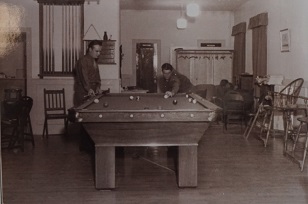
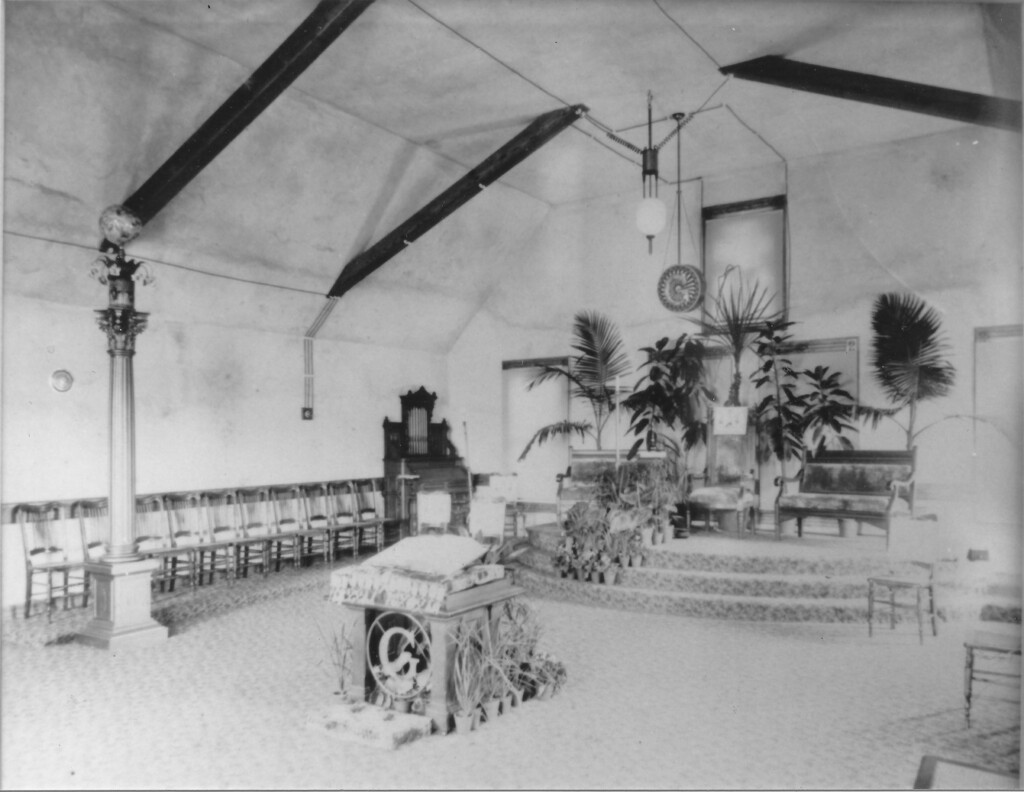
Recreation Room at the Bethpage Lodge No. 975 Masonic Service Center in Farmingdale.
It’s no secret Freemasons support those who serve in the military. Many Masons were veterans themselves, and the fraternity had its strongest membership growth in the postwar years, including the Civil War, World War I, World War II and the Korean War. The Masonic Service Association dates to the First World War, when Masons and the federal government were looking to combine their efforts in the support for American troops. The Masonic Service Association was created to be a conduit between the government and the 49 U.S. Grand Lodges operating at the time. The Association expanded into four separate sub-groups: Education, Disaster Relief, Media Relations, and VA Hospital Visitation.
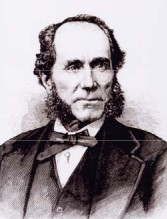
A bearded, bespectacled older gentleman looked across the long procession of brave men, gazing admirably at how local towns were able to organize fire departments across the rural, pre-suburbia
Masonic community activities during World War II included the creation of a national network of U.S.O.- like service clubs by state grand lodges and the Masonic Service Association. During World War II, 90 Masonic Service Centers were formed to service the military throughout the U.S. In the State of New York, eleven Masonic Service Centers were active during the war, each supplying a place that provided meals, recreation, transportation, letter-writing material, and free long-distance phone calls for the servicemen.
The program was developed by Masonic Service Center director Carl H. Claudy and Missouri Past Grand Master, Senator Harry S. Truman.
Brother Truman was raised a Master Mason in 1909 in Belton Lodge, Missouri. He was a charter member of Grandview Lodge and served as its first Worshipful Master. In 1940, during his Senate reelection campaign, Truman was elected Grand Master of the Grand Lodge of Missouri. Truman later stated that his election as Grand Master assured his victory in the general election, one further step closer toward the Presidency. Active in several concordant bodies, including 33° Sovereign Grand Inspector General and an Honorary Member of the Supreme Council at the Supreme Council A.A.S.R. Southern Jurisdiction; member of the Shriners and the Royal Order of Jesters.
Raised as a Master Mason in 1908 in Lodge Harmony No. 17 in Washington D.C., Claudy later served as its Master in 1932 and was elected Grand Master of the District of Columbia in 1943. A prolific author on aviation and photography, Claudy authored over 350 Masonic Talk Bulletins, over a dozen Masonic books and was the associate editor of the Masonic Service Association magazine, The Master Mason for several years.
But it was the future President who became the national spokesperson of Freemasonry’s support of the war effort, quietly sending out the Masonic signal of distress to all brothers in the nations time of need.
In one radio address early in the war, Brother Truman stated “In the last war, we had 49 Grand Lodges trying to do the work of one. In unity there is strength. This time when our boys come marching home victorious, none will look askance and say where was Freemasonry in this hour of need? Approximately 10% of the boys in the service are Freemasons. Another 15% are close kin of Freemasons. Through the Association, Freemasonry is meeting the challenge of their great need. At this very moment in foxholes and on shipboard, beneath the sea and in the air, countless hands are being clasped in fraternal recognition as brothers find one another in the darkness as well as in the daylight. And countless fathers bravely wishing Godspeed to their departing sons are saying ‘Boy, when your hour of darkness and loneliness come, find a Freemason, and tell him you are the son of a Freemason, and you will find a friend.’ “
“And through our great Association the flower of Freemasonry is being made to bloom in the rocky soil of war’s desolation. And the fruits of Freemasonry are being shared by every boy and girl who wears the uniform. There’s nothing for sale in Masonic service centers. Neither mineral nor metal is the price of Freemasonry service to our boys, and yet our centers are supported without fanfare or public appeal because in our heart glows the great light of charity; unostentatious, but sincere. Each of us giving generously because we have seen the light and heard the cry of the widow’s son.”
The Masonic Service Centers were open to all service members, no matter if they were Freemasons or related to a brother. The Centers were not used as a recruitment center for prospective members, but a place where recreation and community events would help the soldiers keep their minds off the war and enjoy some fellowship. The volunteer hosts and hostesses at the Service Centers would also write thousands of letters to Masonic brothers overseas, offering words of encouragement and support.
Only two Masonic Service Centers were on Long Island for military servicemen: Bethpage No. 975 in Farmingdale and Jephtha No. 494 in Huntington. The Bethpage lodge was co-sponsored with the Bethpage O.E.S. No. 651, and for the duration of the war, thousands of servicemen were entertained with coffee, cake, books, and games by the Farmingdale Service Organization (F.S.O.). All the items were donated to the Service Center and the Bethpage brothers received letters of gratitude from the deployed servicemen for many years.
The second Service Center on Long Island was only eleven miles away in Huntington Village, where Jephtha No. 494 entertained 6,447 servicemen.
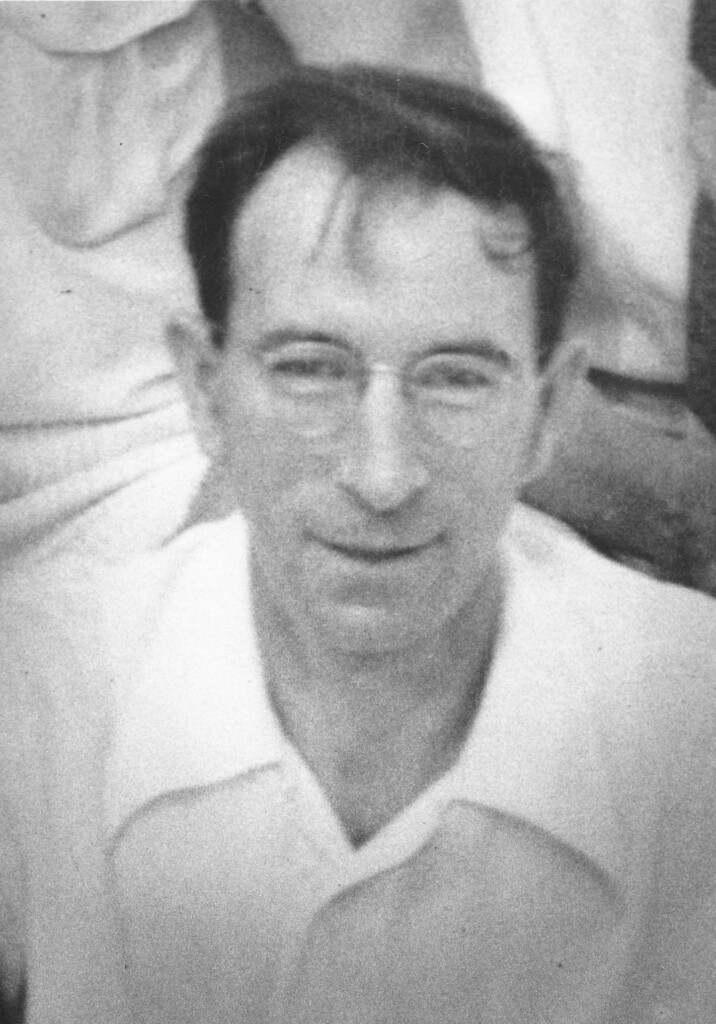
W:. Dana Tuthill
First proposed by Junior Past Master W:. Dana J. Tuthill at the October 27, 1942, Stated Communication, he spoke “of the boys in the Armed Service and their recreation while on a pass on furlough while in Huntington.” Tuthill proposed the second-floor recreation room could be used for the local servicemen. A motion was made and seconded the room was to be used by the men in the armed services, the Temple be properly posted, and to have hostesses and members of the lodge to supervise. On Saturday, November 7, 1942, the Jephtha Lodge Recreation Room was first open to the servicemen, with hours set for reading between 9AM-11AM and recreation from 2PM-11PM.
Within two weeks, the local Service Center was becoming very popular, with up to 200 servicemen spending time at the lodge on a weekly basis. The Trustees realized the 37-year-old lodge building needed some touching up and got to work cleaning the walls, painting the tiled ceiling, installing wainscotting (still in the recreation room today), removing old pictures and even donating a stuffed deer head to the local Elks Lodge. The Trustees spent $500, which is the equivalent of $8,400 in 2021, a tidy sum for a rural, all-volunteer organization dependent on donations.
By February 1943, two new Army-Navy Schools were setup near Huntington, and the local servicemen needed places to go during their downtime. More volunteers were needed to maintain the now, very active lodge building. By the spring of 1943, the local hostesses approached the Trustees for permission to have a “tea dance” on Sunday afternoons. The Service Center hostesses offered to pay fifty cents each to raise funds for one dance with each serviceman. The Jephtha brothers were opposed to the plan as presented and offered to cover all financial obligations for any dance for the servicemen.
Tuthill reported over 300 sailors and soldiers visited the building during June 1943, leading to the need of a portable lunch counter, which was followed by a donation of an ice box by Brother Raymond Brush.
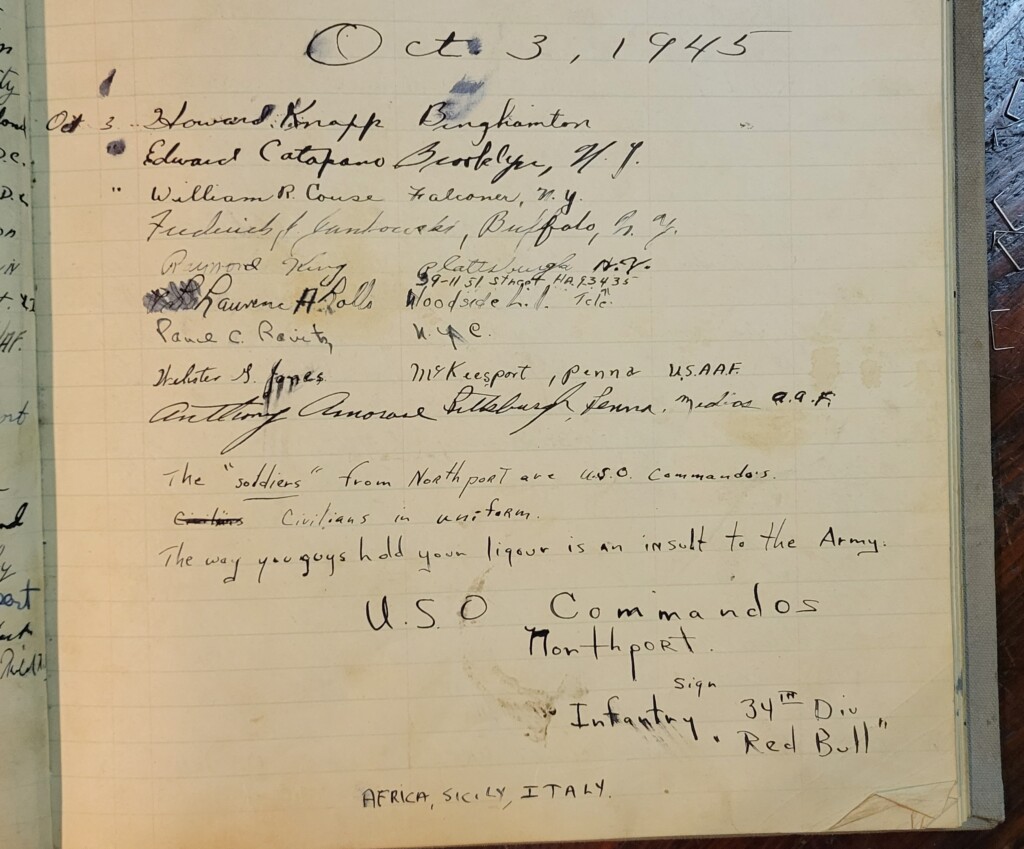
Final page of the Jephtha Lodge Masonic Service Center register, October 3, 1945
Preserved in the Jephtha archives is a visitors’ register, signed by thousands of servicemen between September 1943 and October 1945. Each signature carries a story of the brave sailors and soldiers who defended our great nation during World War II. The servicemen were not just local Long Islanders, but others who travelled a great distance to be entertained at Jephtha Lodge during some well-deserved R&R. Cities of Phoenix, San Francisco and Cleveland were represented, as well as the small towns of Metcalf, Illinois and Ellensburg, Washington.
The fraternal bonds between these once strangers became much stronger during their time in the service, which is briefly captured in the final entry of the register from the “Northport U.S.O. Commandos,” survivors of the campaigns in Africa and Sicily.
https://connetquot838.org/wp-content/uploads/2021/03/Square-on-Flag-300x189.jpg00webmasterhttps://connetquot838.org/wp-content/uploads/2021/03/Square-on-Flag-300x189.jpgwebmaster2021-10-30 20:32:332021-10-30 20:32:33The Masonic Service Center at Jephtha Lodge
We’d be remiss if we did not acknowledge The R:.W:. Matt Dinizio, GLSO for the Suffolk Masonic District for his leadership and innovation in Masonic Educations for the District.
He was very forward thinking and his classes, like the Masters Chair, Road to the East and Masonic Development course were well attended and very well received.
Making the courses more digital so that the members could reference the material from a computer instead of carrying around a large 3 ring binder, was a long to coming and R:.W:. Dinizio got the District there in no time flat.
For all his accomplishments he is also deserving of a great deal of thanks and applause for his work in the district.
P.S. you can’t image how hard it is to get a good picture of this Brother. He is either hidden in the back or not in pictures he should be in…
https://connetquot838.org/wp-content/uploads/2021/03/Square-on-Flag-300x189.jpg00webmasterhttps://connetquot838.org/wp-content/uploads/2021/03/Square-on-Flag-300x189.jpgwebmaster2021-10-25 12:36:452021-10-25 12:36:45Applause for out outgoing GLSO Matthew Dinizio
As all things go the last 20 or so months past, times were different. Grand Lodge elections and installations took place this past weekend in Utica, Masonic Care Campus.
The M:.W:. Richard J. Kessler was installed as the Grand Master of Masons in the State of New York and
R:.W:. Steven A. Rubin elected and installed as the Deputy Grand Master of Masons in the State of New York.
First it’s with much appreciation and pride that we say thank you to M:.W:. William Sardone, Past Grand Master of Masons. All other Grand Lodge officers, elected and appointed who stayed at their post through most difficult times.
The Suffolk Masonic District Team for the ensuing 2 years.
R:.W:. Jeffery G. Santorello, District Deputy Grand Master of the Suffolk District, representing the M:.W:. Richard J. Kessler, Grand Master of Masons in the State of New York.
The R:.W:. Robert J. Licata, Grand Sward Bearer, of the State of New York, Grand Lodge Staff officer for the Suffolk Masonic District.
V:.W:. William De Benedetto, Assistant Grand Lecturer, Suffolk Masonic District
V:.W:. Bruce A. T. Siska, Assistant Grand Lecturer, Suffolk Masonic District
V:.W:. Gilbert C. Kruse, Assistant Grand Lecturer, Suffolk Masonic District
The next two years have a very bright outlook indeed. All of the above officers are “worthy and well qualified” and above all have a deep love of the Craft and their Brothers.
Please wish them all the best in their coming endeavors and give them all the support that the Suffolk District always has.
https://connetquot838.org/wp-content/uploads/2021/03/Square-on-Flag-300x189.jpg00webmasterhttps://connetquot838.org/wp-content/uploads/2021/03/Square-on-Flag-300x189.jpgwebmaster2021-10-25 10:02:492021-10-25 10:02:49The Suffolk District Team 2021-2023
Brothers it’s been an interesting and troubling last 2 years to say the least. Accepting the position of DDGM is no light decision and I am certain that had R:.W:. Kevin McCauley known what was to come during his tenure, he would have still taken the position without hesitation.
As we all know the District and Grand Lodge asked all current Grand Lodge and District Officers to remain at their posts until a Grand Lodge session could be convened safely to allow the election, appointment and investiture of all the officers be completed safely and properly.
All the Officers of the Suffolk Masonic District said yes to stay without any hesitation. R:.W:. McCauley lead the Suffolk District through unprecedented times, at least in our lifetimes. I am also equally sure he will be both glad and sad when he is finally succeeded by (at the time of this post release) R:.W:. Jeff Santorello, the incoming DDGM for the Suffolk Masonic District.
I would think we as a District owe R:.W:. McCauley a big round of applause and our deepest appreciation for his leadership and perseverance throughout the last 3 years. So please join in sending R:.W:. Kevin McCauley our thanks and appreciation on a job well done and for his fortitude during these times.
We all wish R:.W:. McCauley the best in all future endeavors and in life. Please leave your congrats and well wishes in the comments below.
https://connetquot838.org/wp-content/uploads/2021/03/Square-on-Flag-300x189.jpg00webmasterhttps://connetquot838.org/wp-content/uploads/2021/03/Square-on-Flag-300x189.jpgwebmaster2021-10-24 14:06:292021-10-24 14:06:29A big thank you to the immediate Past DDGM R:.W:. Kevin G. McCauley
Despite Long Island Freemasonry tracing its roots to Huntington Lodge No. 26 A. & Y.M. (1796-1818), there are no direct connections to it with Jephtha No. 494 F. & A.M. The challenges of traveling to a lodge in the late 18th and early 19th centuries through local, rural terrain prevented many of the 30 known brothers from attending lodge meetings. By 1806 all meetings ceased at Long Island’s first Masonic lodge, Huntington Lodge No. 26, and its charter was finally surrendered to the Grand Lodge of New York in 1818.
Forty-one years after Huntington Lodge No. 26 disbanded, seven charter members of Jephtha Lodge started laying the foundation for a new Huntington lodge in late 1859. Most were members of lodges meeting in New York City, including Joppa Lodge No. 201, Charter Oak Lodge No. 249 and Lexington Lodge No. 310. Only Charles Albert Floyd, Jephtha’s first Secretary, was from a Long Island lodge, Suffolk No. 401 in Port Jefferson. He was the son of John Floyd, a member from Huntington’s original Lodge No. 26 and a charter member of Suffolk Lodge No. 60 (1796).
In the mid-19th century, the geographical area comprising the present Nassau County was under the jurisdiction of Morton Lodge No. 63 in Hempstead, and the area of what is now western Suffolk County was under the jurisdiction of Jephtha No. 494 in Huntington. Because of these jurisdictional restrictions, any proposed, new Masonic lodge seeking dispensation had to petition the closest lodge for permission to form in a nearby town or to accept applications for membership.
Travel to and from a lodge was accomplished either by foot or using horses. In the History of Long Island by Peter Ross (1902), travel was depicted as follows: “Two members who lived on the north side of the Island, perhaps twenty miles from Hempstead, reached the Lodge by what is called the ride and tie method. That is, they both started together early in the morning, one riding the single horse on the farm, and the other walking. The rider proceeded to a place agreed upon where he tied the horse and took up his journey on foot. When the first walker reached the horse, he mounted and after passing his walking companion tied the horse again at another place of agreement. So, the journey was made to the Lodge, and the return on the following day was a repetition of the same.”
It would not be until the 1860’s, when Freemasonry was regaining popularity among men, that lodges started popping up on Long Island. The decades of the prolonged anti-Masonic period a few years earlier took its toll on the fraternity, with all lodges on Long Island shutting down for more than twenty years. In 1865, the American Civil War was ending and many returning veterans desired continuing fellowship in their hometowns. Freemasonry was the perfect organization for this post-war era.
In the following decades, brothers from Jephtha Lodge in Huntington set out to form three lodges in distant townships, becoming charter members of lodges that still meet today.
Glen Cove No. 580
The former home of Glen Cove No. 580 founder Edgar E. Duryea. The lodge purchased the home in 1909 and met here 1913-1973
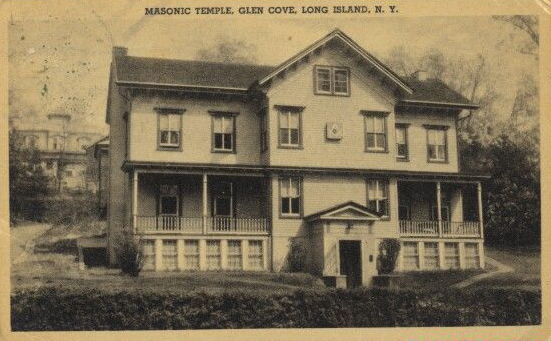
At the January 9, 1865, Stated Communication, Jephtha brothers Edgar E. Duryea, Stephen B. Craft and James E. Benham and several other brothers from different lodges, formally requested a dispensation to form a lodge in Glen Cove. A series of jurisdictional objections from Morton Lodge No. 63 in Hempstead delayed Glen Cove No. 580 from obtaining its charter until March 1866.
Duryea was the founder of the successful Glen Cove Starch Factory where many of the Glen Cove charter members were employed, and he was a member of the famous Civil War Duryea Zouaves. After Edgar Duryea’s death in 1900, the Glen Cove Lodge continued to meet at his home.
Alcyone Lodge No. 695
In 1867, there were approximately twenty master masons residing in the villages of Northport and Commack, most of whom hailed from Jephtha No. 494 in Huntington. Desirous of forming a lodge in Northport, the brothers organized a masonic club and began the preliminary work of organizing a lodge. The brothers wrote the bylaws, set a $25 initiation fee and $3 annual dues. Officers for the proposed lodge were selected and several rehearsal meetings were held for the brothers to perfect the ritual and assure proficiency in the standard of the work, requirements for new masonic lodges.
Jesse Carll, charter member of Jephtha No. 494 and Alcyone No. 695.
When the brothers were confident that all the necessary requirements were in place, they proceeded to the next stage of creating a lodge. Brother William H. Sammis, past Junior and Senior Warden of Jephtha, was able to persuade the Huntington lodge to grant its consent on September 28, 1868. Originally called Northport Lodge, the petition sent to the Grand Lodge included 21 master masons, 17 of whom were members of Jephtha, including Jephtha’s charter member, Jesse Carll.
Later renamed Alcyone Lodge No. 695, the new Northport masons first met under dispensation on March 5, 1869, on the north side of Main Street in a building later occupied by the Long Island Express Company. Brother William H. Sammis, having sat in both Warden chairs at Jephtha, was qualified and appointed the first Master of Alcyone. The charter for Alcyone was granted on June 23, 1869.
On October 22, 1869, a delegation of brethren from Jephtha entered the new lodge under the leadership of W:. William H. King, Past Master, and presented Alcyone with a set of officer’s jewels as a token of affection and good wishes for the future. These jewels are still in use today by the officers of Alcyone Lodge.
Matinecock No. 806
In 1888, several master masons from Jephtha No. 494 and Glen Cove No. 580 residing in Oyster Bay, met to possibly secure a jurisdictional dispensation to form a lodge in Oyster Bay. Jephtha Lodge approved the new lodge without a dissenting vote, but Glen Cove Lodge gave the Oyster Bay brothers a difficult time. Glen Cove inserted a conditional clause in their dispensation that “the petitioners show their proficiency in the three degrees” that was required to be presented all in one day in Glen Cove. On July 24, 1889 the proficiency was examined and approved, but a series of further delays caused by Glen Cove Lodge, prevented Matinecock Lodge No. 806 from receiving its charter until 1892.
The Matinecock lodge room in the Fleet Building, 1892. The second meeting space for the Oyster Bay lodge, one of the columns created by three charter members including Bro. Sidney B. Walters can be seen on the left.
Nineteen of the forty-two charter members of Matinecock were from Jephtha, including Matinecock’s first Treasurer, Seth Surdam, and Brother Amos M. Knapp, a druggist at Snouder’s Corner Drug Store and confidential messenger for Governor, and later President, Theodore Roosevelt when he resided in Oyster Bay. Snouder’s had the only telephone in Oyster Bay Village, and Brother Knapp was designated to be the trusted individual called to the phone whenever a message came in for Roosevelt which he brought to Roosevelt at Sagamore Hill.
The lodge room was originally very sparse at the first meetings in Oyster Bay. The Altar Bible, the same used for the Masonic degrees of Brother Theodore Roosevelt, was donated by W:. J.K. Oakley and Jephtha Brother William Jones Youngs.; The new columns were made, decorated, and presented to Matinecock Lodge by Brothers Sidney B. Walters of Jephtha, Abraham Fain of Glen Cove No. 580 and William H. Hubbs of Alcyone No. 695.
Fellowship did not end with the formation of these three, new lodges. Jephtha has continued to participate in numerous degrees, District Deputy meetings, fundraisers, picnics, anniversary celebrations and funerals with its Masonic heirs for the last 150 years, an lasting unwavering relationship that continues to this very day. Jephtha is proud to be part of the rich history of Freemasonry on Long Island and its part in helping spread Masonic fraternity to other towns.
Well the Suffolk District Website took a short hiatus to recover and recoup after 8 long years in service to the District. Now it’s back and new and improved. Of course all things are never 100% from the start so if you find and error or need a correction, please just send a note to the webmaster and we’ll take care of it ASAP.
We hope you find the website easy to use and navigate and we have simplified it. There are some elements from the old site rolled in for recognition. You may still register for the site and add yourself to the mailing list (also new and improved).
Registration is open to members in good standing of any Lodge (verifiable through MORI or other app).
https://connetquot838.org/wp-content/uploads/2021/03/Square-on-Flag-300x189.jpg00webmasterhttps://connetquot838.org/wp-content/uploads/2021/03/Square-on-Flag-300x189.jpgwebmaster2021-10-18 16:49:082021-10-18 16:49:08Welcome back to the Suffolk District Website
 Of course most of the Brothers were not only were there to support Riverhead, Peconic and Potunk Lodges with their 2nd degree, but also to try and claim the Suffolk District Traveling Gavel.